The Patent That Became the Sponsored Job Ad
A short history of how programmatic recruitment advertising was invented, why the industry adopted it, and what it took to rebuild it correctly.
The Story Behind Your Recruiting Stack
In 2003, Jason Stuart Gorham saw something the recruiting world hadn't yet realized: What if you could market jobs like digital ads?
Back then, talent acquisition was siloed. Job postings were static. Candidate matching relied on keyword scanning and manual review. Sponsorship was a guessing game about where to spend your recruitment budget.
Gorham imagined a system that would change everything — one that automatically extracted the essence of what you needed from a job description, created targeted keyword profiles, and placed your opportunities in front of qualified candidates at the exact moment they were searching. Real-time. Optimized. Measurable.
It sounds obvious now. It wasn't then.
On January 26, 2010, US Patent 7,653,567 B2 was issued. Its 31 claims outlined a complete system for:
- Automated extraction of job requirements and keywords
- Real-time competitive bidding for candidate attention
- Programmatic placement and performance optimization
- API-mediated routing of qualified candidates to open roles
Today, this approach is the conceptual foundation of modern programmatic recruitment advertising.
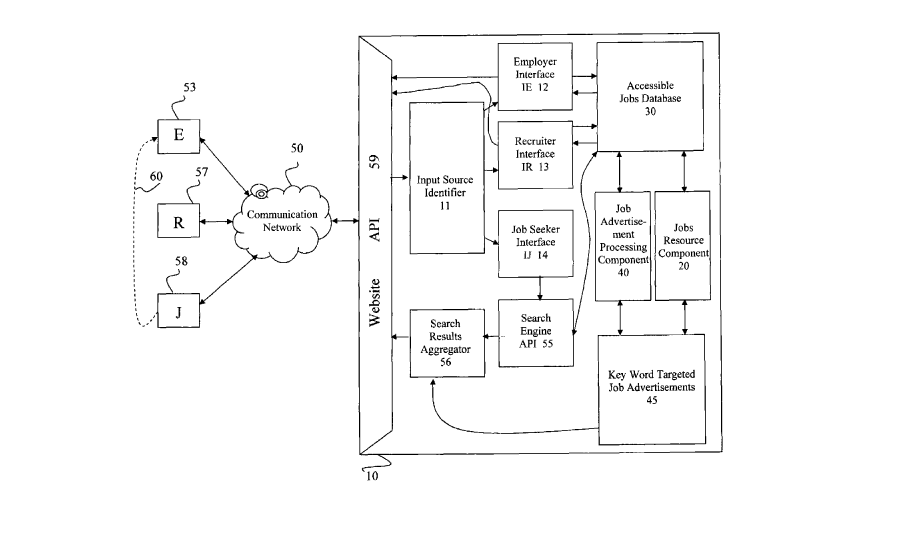
If you're managing talent acquisition at scale, you're leveraging the programmatic approach every single day. Modern recruitment advertising platforms, applicant tracking systems, and talent-marketplace networks all rely on the same core ideas: keyword-based distribution, automated placement, and performance measurement.
The efficiency gains, cost-per-applicant reductions, and ability to reach passive candidates at scale all trace back to this foundational way of thinking about recruiting as a measurable media channel.
Here's what matters to you as a talent acquisition leader: You've been getting enormous ROI from this technology for over a decade.
The programmatic approach has transformed how you fill roles:
- Faster time-to-hire
- Lower cost-per-applicant
- Better candidate-job fit
- Measurable, repeatable recruiting processes
- Ability to compete for talent at scale
That innovation didn't come from accident. It came from a single inventor who understood recruiting and saw the future.
As talent acquisition leaders face unprecedented pressure to do more with less, the question isn't about the past. It's about alignment and partnership.
If you're using programmatic job advertising — and you are — there's value in understanding where that innovation came from, who built it, and how the industry can continue to evolve responsibly.
You deserve recruiting technology partners who are transparent about their innovation heritage and committed to sustainable, ethical business practices. Partners who understand that great talent acquisition technology serves both sides: employers who need to hire, and the inventors and innovators who made it possible.
See What the Original Model Looks Like Today
A 30-minute walkthrough of the platform against your data. No integration required.